What Is Lymphedema?

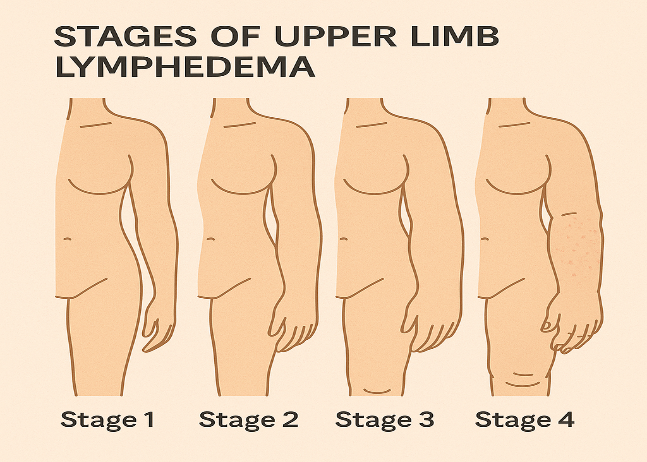
Lymphedema is a chronic condition that is caused by a disruption or damage to the normal drainage pattern in the lymphatic system. It most often causes swelling of the arm, but it can also affect the breast. The swelling, caused by an abnormal collection of too much fluid, is called lymphedema.

The underlying cause of lymphedema is multi-factorial. Removing the axillary lymph nodes increases your risk for developing lymphedema, because some lymph nodes in the axilla drain the lymphatic fluid from both the breast and the arm.The risk of developing lymphedema is related to the number of nodes removed and the number of treatment modalities provided to the axilla. After sentinel node biopsy only, the risk of upper limp lymphedema is 0-7%, and it increased to 20% after axillary node dissection. Receiving axillary radiation after surgery further increased the risk that may reach up to 40%, owing to additional damage to the lymphatic system in the axilla. Certain types of chemotherapy agents are associated with increased risk of lymphedema as well.
Lymphedema prevention

The goal of breast cancer treatment is to eradicate the disease and maintain a good quality of life for the patient. The treatment of lymphedema is challenging and may only be effective in the early stages of the condition by undergoing a lymph node transplant procedure. Therefore, reducing the risk of lymphedema is an essential target for your treating team. This can be achieved by de-escalating treatment whenever possible:

    • Omission of sentinel node biopsy or axillary dissection when not indicated.
    • Performing lymphedema preventive surgical techniques at the time of axillary node dissection, such as axillary reverse mapping (ARM) and immediate lymphatic reconstruction (ILR).
    • Performing a delayed sentinel node biopsy when the diagnosis of invasive cancer is uncertain.
    • Omission of radiation therapy in patients with low-risk disease.
    • Avoiding the surgically dissected axilla at the time of radiation to avoid additional damage.
    • De-escalation of specific chemotherapeutic agents when it does not reduce the survival benefit.
    • Early post-operative lymphedema preventive programs, usually provided by physical therapists, include a lymphedema massage, specific exercises, and other preventive measures.

Axillary reverse mapping (ARM)

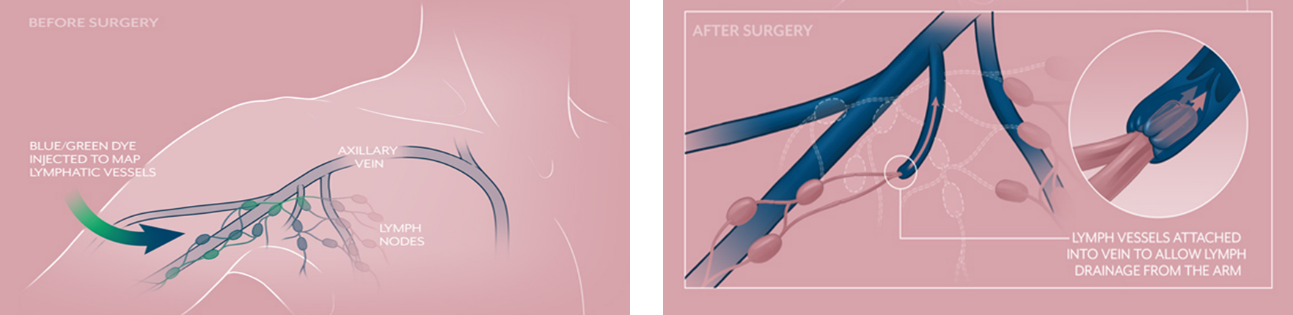
It is a technique that is performed before starting the axillary node dissection to map the lymphatics and the lymph nodes draining the arm, and avoid removing them. It is done by injecting a dye in the inner part of the arm and tracing it into the axilla. It does not guarantee a 100% success as some diseased lymph nodes that has to be removed may be found to drain the arm as well, but it will reduce the risk of removing normal arm-draining nodes.

Immediate lymphatic reconstruction (ILR)

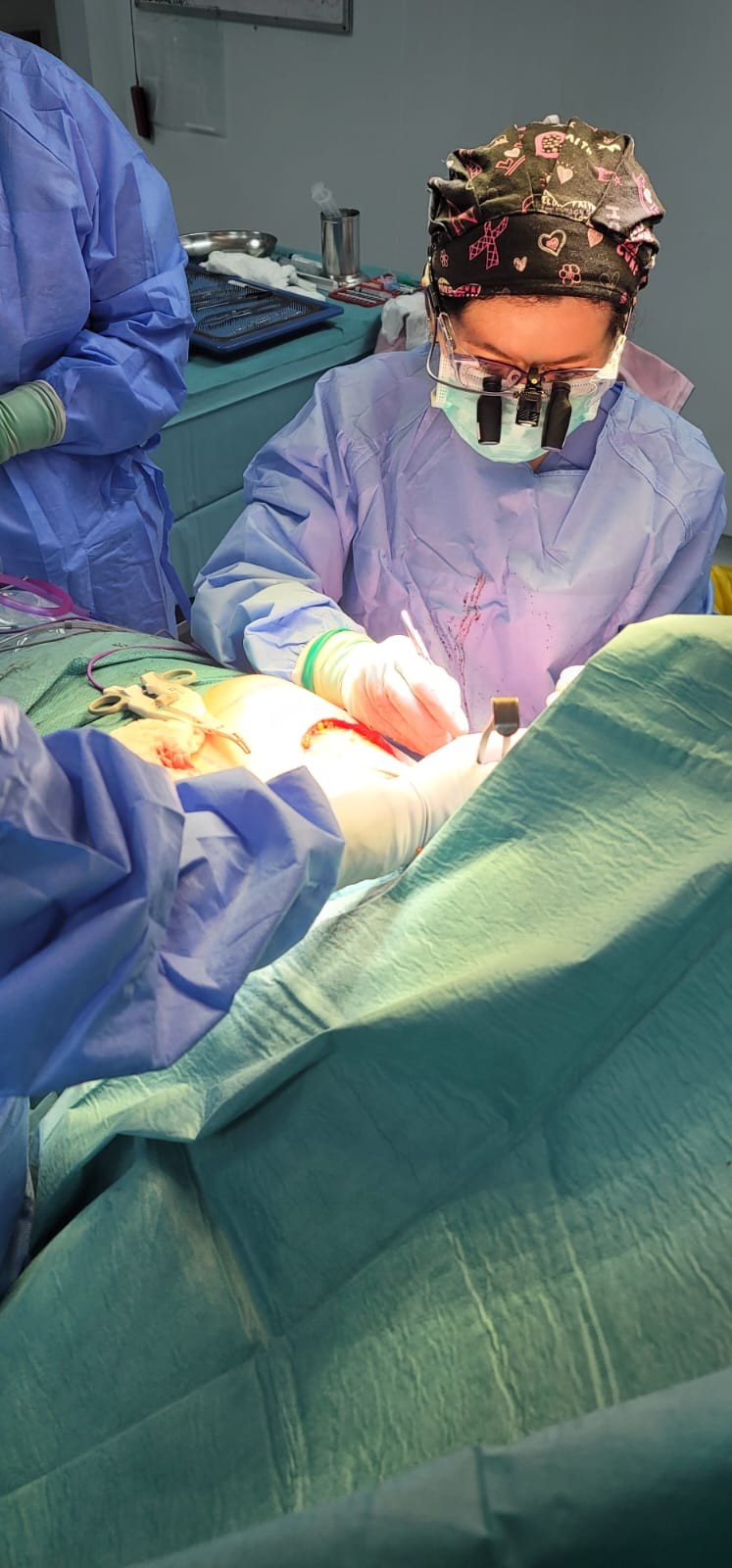
This is a relatively new innovative procedure that is performed during axillary node dissection to immediately identify and reconstruct the arm-draining lymphatics, to re-establish the drainage and prevent arm lymphedema. It uses a microsurgical technique, requiring a microscope or a magnifying surgical lopes, that is performed by a trained breast or plastic surgeon. The procedure may be referred to as “LYMPHA” or “S-LYMPHA”.

The procedure is performed in three steps:

      1. Identifying the arm-draining lymphatics using ARM technique.
      2. Dissecting and preserving a proper vein during axillary node dissection to be used for the anastomosis.
      3. Performing the microsurgical anastomosis (connection) between the arm-draining lymphatic and the vein to establish direct draining, by-passing the lymph nodes that were removed.

This procedure is associated with a 50% reduction in the risk of arm lymphedema after axillary node dissection. Dr Alazhri has special training and experience in performing this procedure.

What can you do?

The risk of developing lymphedema continues for the rest of your life, so it is imperative that you are aware of these risks. It is best to learn about preventative measures for lymphedema before surgery and discuss risk-reducing options and preventive procedures with your breast surgeon.

After lymph node surgery, you should be compliant with the instructions provided by your surgeon and physiotherapist, and be aware of the signs and symptoms to look for. If you experience unusual and painful swelling, you should immediately notify your doctor or physiotherapist to take steps to reduce swelling and maintain that reduction. With proper physical therapy, health care, good nutrition, and exercise, it may be possible for you to reduce the effects of lymphedema.

For more information in Arabic, please refer to lymphedema booklet.