Breast reconstruction after a mastectomy is a personal choice, and it helps many women restore their sense of comfort and body confidence. Reconstruction can be done at the same time as the mastectomy or later, depending on your health, cancer treatment plan, and preference. Broadly, there are two main approaches:
- Breast Implants: which involve placing a silicone or saline implant beneath the chest muscle or skin.This can be done in one stage procedure with a direct to implant reconstruction at the time of mastectomy, or in 2-stage reconstruction plan where a tissue expander (an empty silicone balloon- like prosthesis) is placed at the time of mastectomy or at a later time (delayed reconstruction), then gradually filled with saline at the doctor’s office, followed by an exchange of the expander to a permanent implant in 3-12 months.
- Autologous reconstruction: which uses your own tissue, usually taken from the abdomen (TRAM or DIEP Flap), back (Latissimus Flap), or thigh (Gluteal Flap).
This option can create a more natural-feeling and looking breast, and it is usually preferred to be performed as a delayed procedure after completion of other cancer therapies.
Each method has its pros and cons, and the right option depends on your body, lifestyle, and medical situation.
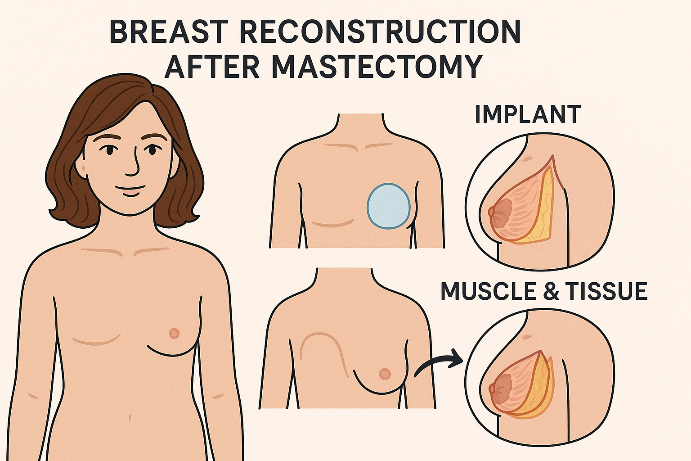
Additional reconstruction procedures
Breast reconstruction is a dynamic procedure. In addition to reconstructing the breast, some patients may need additional reconstruction procedures including:
- Nipple reconstruction: can be done surgically or using 3D tattoo art. Usually performed at the last stage of reconstruction.
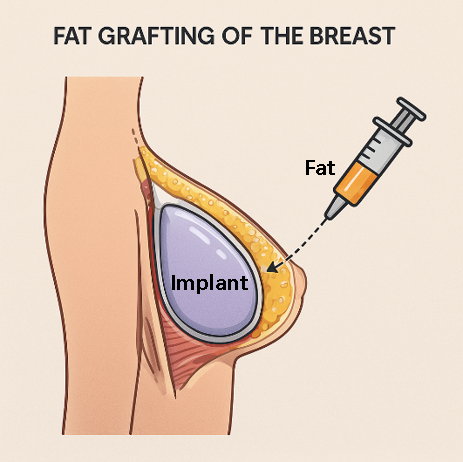
- Fat grafting: involves harvesting fat from your own body, eg, abdomen, flanks, thigh, by liposuction and re-injecting this fat into the skin of the reconstructed breast.
Fat grafting can be a helpful addition after implant-based breast reconstruction, called “Hybrid reconstruction”, offering several advantages; It smooths out contour irregularities and fills small depressions around the implant, giving the breast a more natural shape and feel, rejuvenates the skin and improvesits texture and quality, especially after radiation. Fat contains regenerative cells that can help soften tight or damaged tissue, making the breast feel more comfortable.This technique may require multiple sessions to achieve the desired result, but the recovery is generally quick.
- Symmetrizing procedures for the other breast
Some patients may need to undergo surgical procedures for the other (healthy) breast to achieve symmetry in shape and/or size. These include reduction (reducing the size), mastopexy (lifting) or both, augmentation (increasing the size), or fat grafting.
A trained onco-plastic breast surgeon or plastic surgeon will be able to discuss with you the benefits and risks of each procedure and help you decide what option is best for you.
Are There Any Alternatives to Breast Reconstruction Surgery?
It’s also completely valid to choose not to have reconstruction at all. Some women prefer a flat closure, while others use external prostheses. There’s no single “right” choice, only the one that feels best for you.
Making Your Plan, and Coping with Changes
Talking with an onco-plastic breast surgeon or a plastic surgeon at the beginning of the treatment journey can help you understand what to expect from each option, including recovery time, appearance, sensation and long-term results. The goal is to support you in making an informed decision that aligns with your comfort and priorities. What is best for you and your body may not be what is best for another woman.
If you think you will opt for a breast reconstruction, you should speak with your medical team before you have the mastectomy, even if you plan to wait until later to have your breast reconstruction.
Whether you undergo breast reconstruction, wear a prosthetic breast, or choose to simply go flat, you should feel free to make whatever decision is right for you. The goal is to prevent the physical and emotional discomfort of unwanted change, while enabling you to accept what has occurred and continue on with your life.